Factory cost and project cost never meet
The plant reports cost per unit and the project ledger reports contract margin, and because the two are built on different bases neither explains the other.
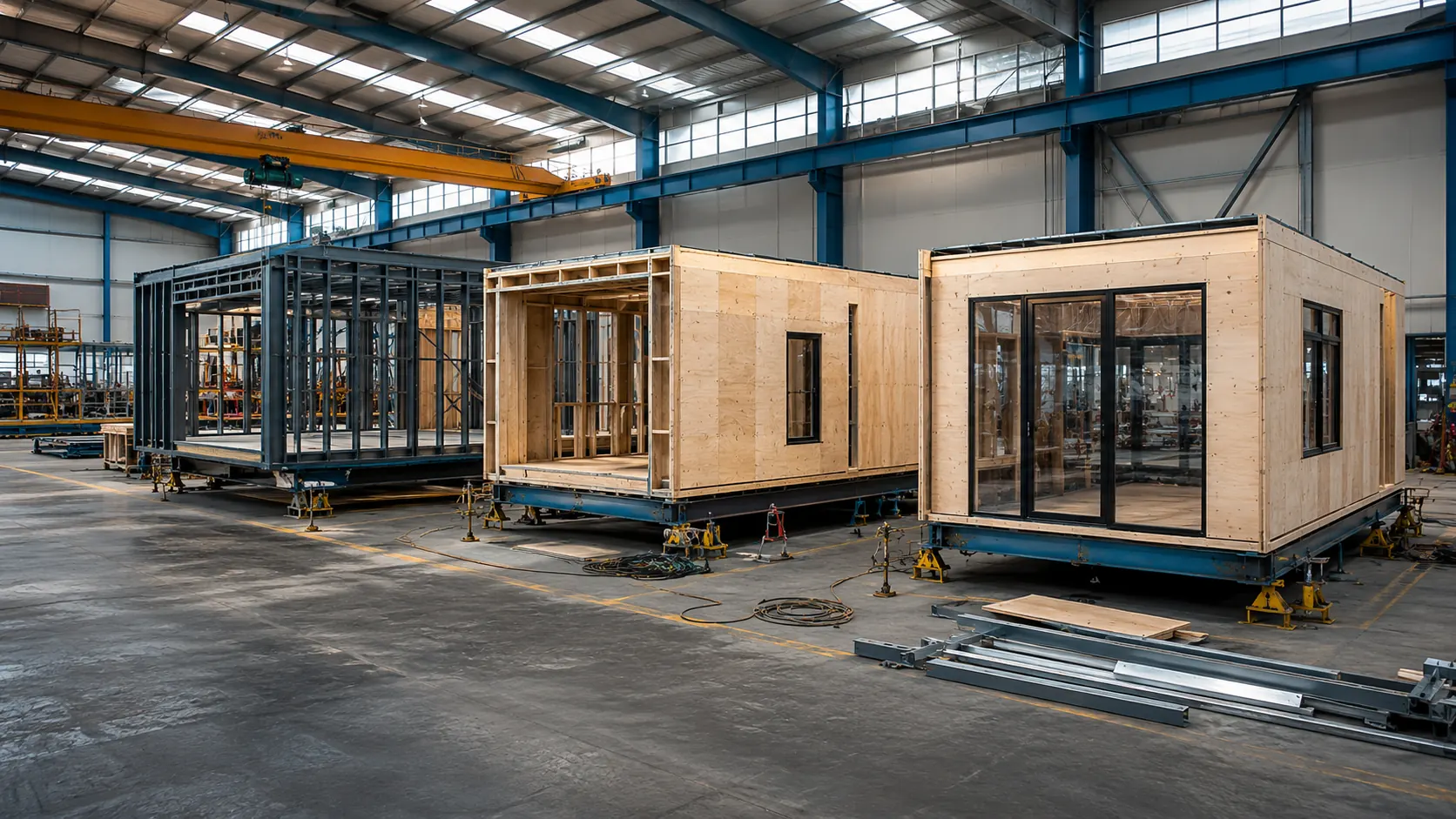
Modular buildings
Modular sits awkwardly between manufacturing and construction, and its reporting usually inherits the worst of both: a factory measuring units and a project ledger measuring contracts, with no shared view of what a job actually cost. Add a hire fleet and there is a third set of economics again. We join the factory, the project and the fleet so margin is visible per job and per unit, and so utilisation is measured on the assets rather than estimated.
Discuss your operationWhat we usually find
The plant reports cost per unit and the project ledger reports contract margin, and because the two are built on different bases neither explains the other.
Delivery, craneage and site works are pooled into overhead rather than attached to the job that incurred them, which flatters the difficult jobs and penalises the simple ones.
Hire units on site, in transit, in refurbishment and idle are tracked by hand, so the return on the fleet is an estimate nobody quite trusts.
Where we start
Scope depends on the state of your systems. These are the pieces that recur in this sector.
Materials, labour and factory overhead attributed to the unit and the production run that consumed them.
Factory cost, transport, installation and site works joined to contract revenue, so margin is known per job rather than per contract type.
Where every hire unit is, what it earns and what refurbishment costs, tracked rather than reconstructed.
What the last year of delivered jobs says the rate card should be, by building type and site condition.
What changes
You own all of it: the code, the written definitions and documentation aimed at whoever maintains this after us.
The builds behind it
Your finance, customer and operational records joined into one dataset, with each figure defined once and traceable back to the system it came from.
Reporting built on top of the joined data, aimed at the few revenue and cost drivers that actually change the result.
One defined task, automated inside a process that already exists, measured against whatever it replaced.
Driver-based models built on the same definitions as your reporting, so the forecast and the actuals stop disagreeing.
Worth asking